 BS
BS

The Coalition for Free and Fair Elections “Pod lupom” has presented the results of its latest public opinion survey on the quality of life of citizens in Bosnia and Herzegovina, the level of trust in BiH institutions, and citizens’ attitudes toward Euro-Atlantic integration.
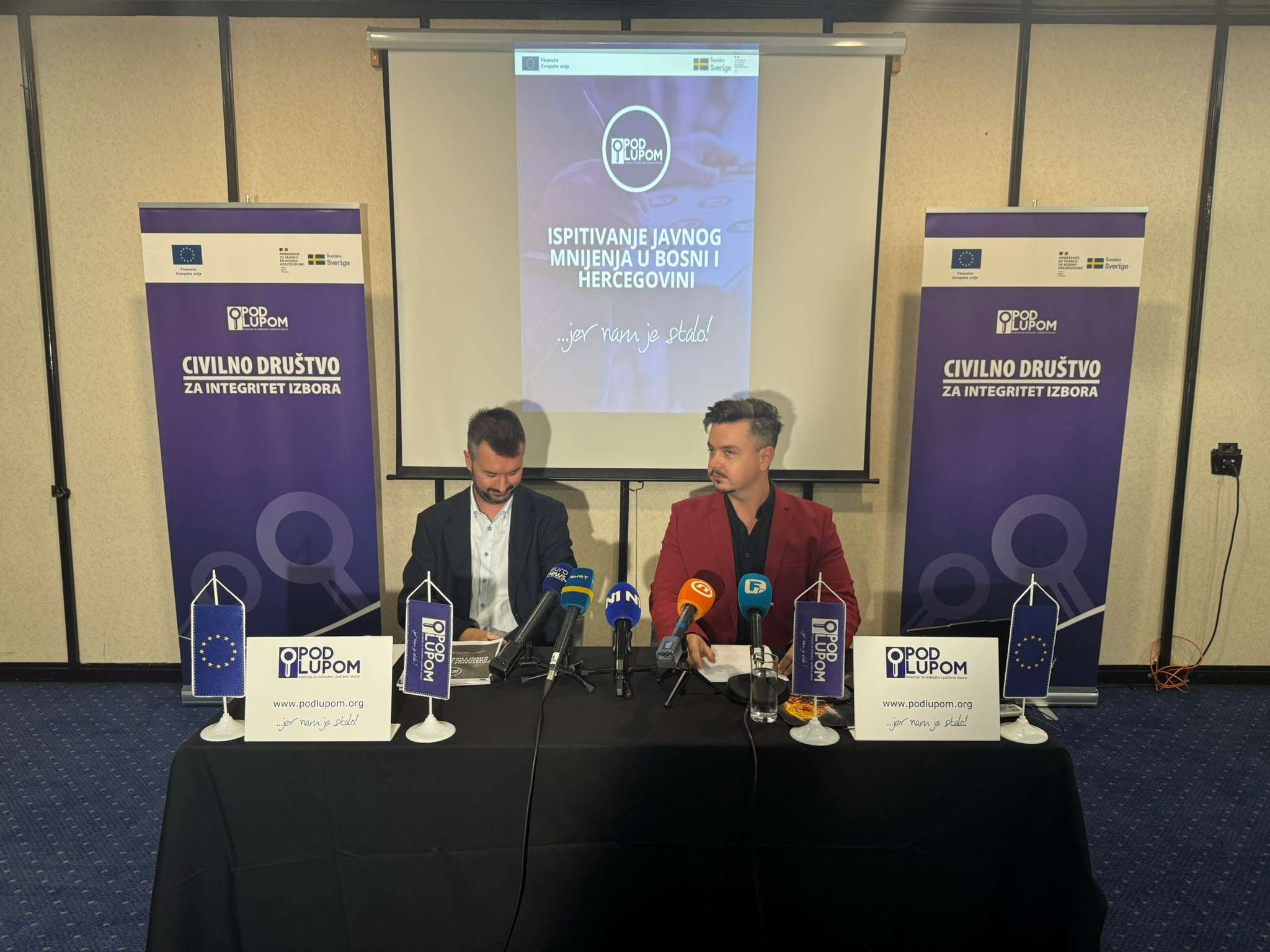
The findings point to deeply rooted structural problems in BiH society that reinforce one another and generate an increasingly pronounced sense of insecurity and distrust among citizens. As the key problems in BiH, citizens most frequently identify crime and corruption (30.2%), the poor state of the economy (16.8%), and the unfavorable political situation (14.9%). On the other hand, the three most important aspects of everyday life for citizens are the healthcare system (26.2%), income (22.5%), and security (19.8%). Notably, in the same survey conducted two years ago, citizens stated that improving the economic situation was their top priority; however, after two years, a better healthcare system has become the primary concern.
Trust in institutions and social actors has further eroded. Nearly one-third of citizens (29.7%) report that they do not trust anyone in society, indicating a deep crisis of social cohesion. At the same time, even the traditionally most stable pillar—family—has recorded a significant decline in trust (from 24.7% in 2024 to 8.5% in 2026), suggesting broader social and economic pressures affecting even the closest social ties.
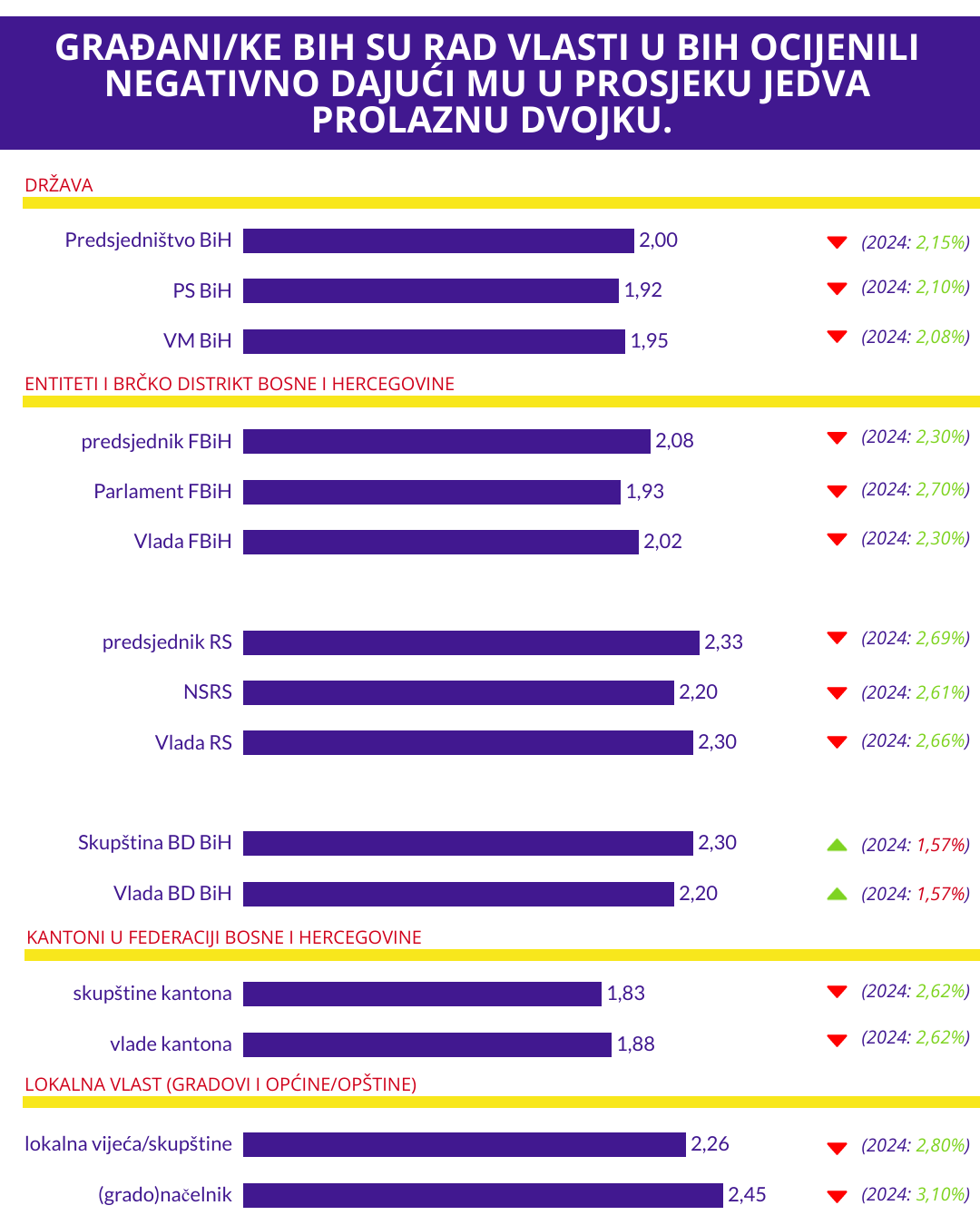
Perceptions of the work of authorities largely reflect these attitudes. A majority of citizens believe that authorities do nothing (25.4%) or act solely in their own interest (20.9%). This suggests that citizens do not perceive political representatives as actors who respond to their needs. When assessing the performance of all institutions in BiH at the state, entity, cantonal, and local levels, citizens awarded institutions a barely passing grade of 2, alongside a decline in trust across all levels of government. The highest average rating, 2.45, was given to mayors, indicating that the local level of government enjoys the greatest level of trust among citizens. However, compared to the rating of 3.10 from two years ago, it is evident that even the local level is gradually losing public trust.
The combination of these factors—economic insecurity, corruption, and low institutional trust—directly influences citizens’ views on remaining in the country. Nearly half of citizens (40.6%) have seriously considered leaving BiH. A significant generational gap is evident: 62.1% of younger citizens have seriously considered leaving, compared to only 7.2% of older citizens. This gap indicates a loss of perspective among young people and represents a serious risk for the country’s long-term social and economic development through continued brain drain.
It is also concerning that more than half of BiH citizens (63.5%) believe they are living worse today compared to five years ago. Moreover, a growing trend in such perceptions is evident, given that only two years ago, a majority of citizens (52.3%) believed they were living better than five years prior—something that is no longer the case today.
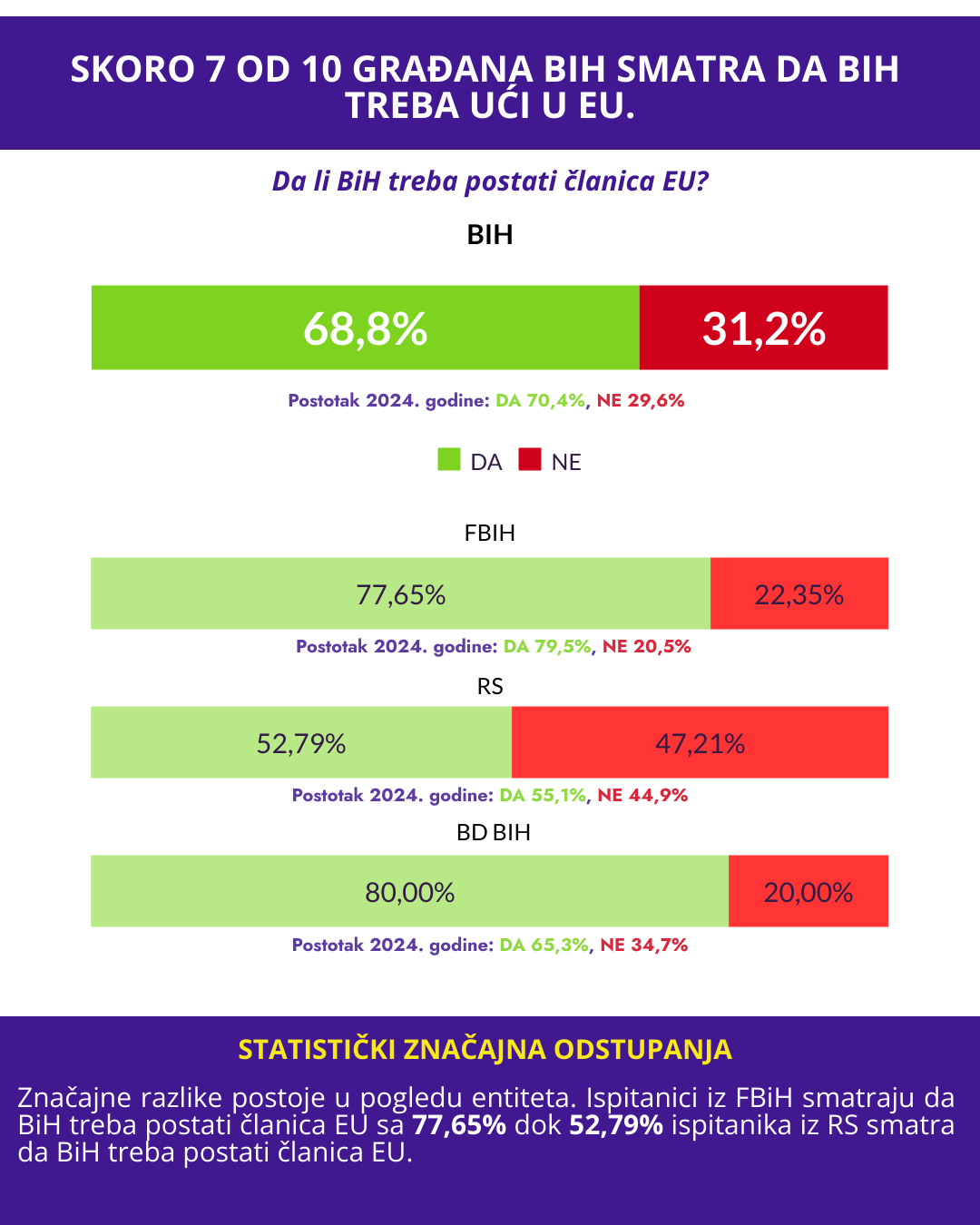
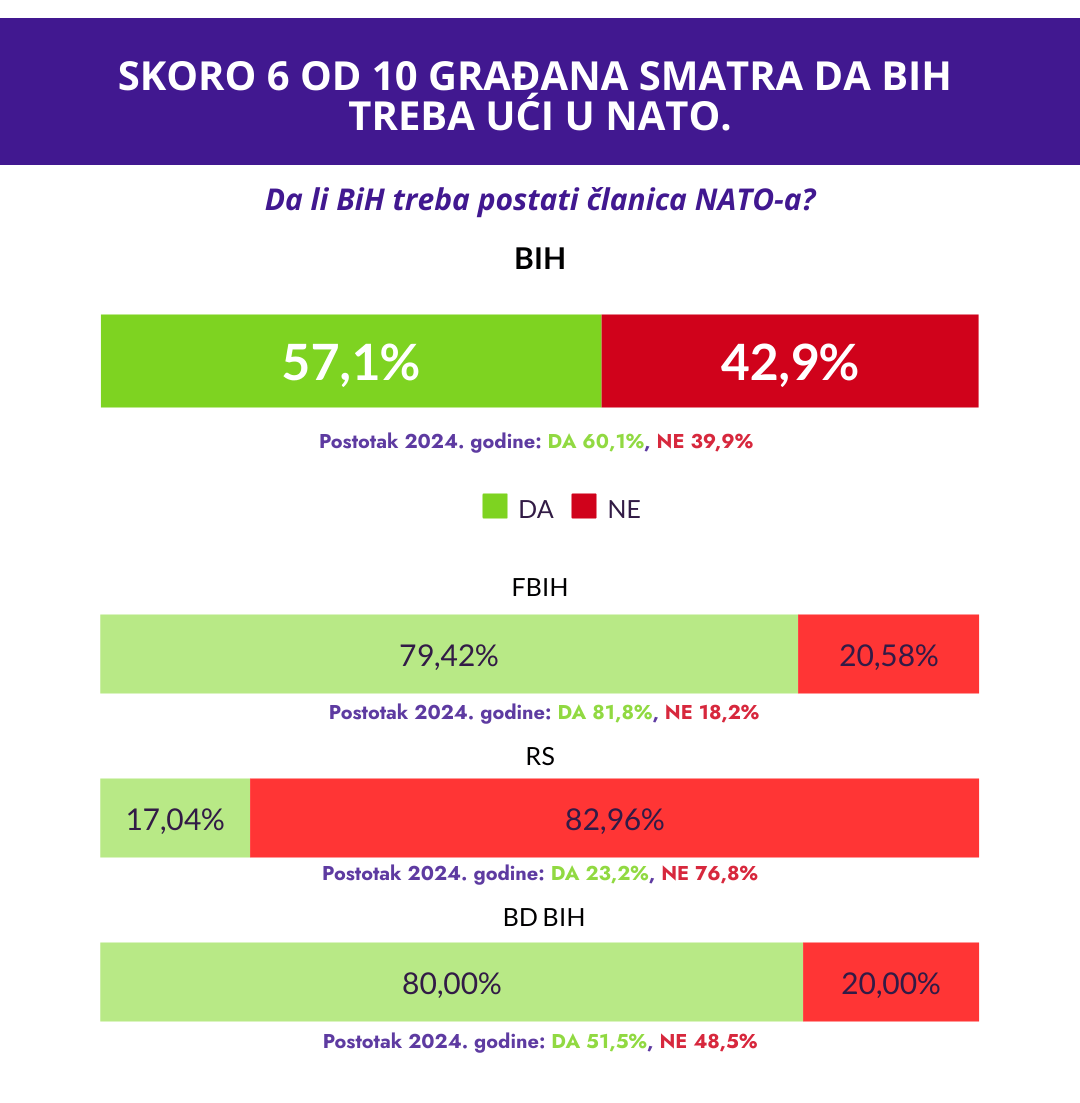
Despite predominantly negative perceptions of internal conditions, citizens continue to demonstrate a clear orientation toward European and international integration. Nearly seven out of ten citizens (68.8%) support Bosnia and Herzegovina’s membership in the European Union. Significant differences exist between entities: 77.7% of citizens in the Federation of BiH support EU membership, compared to 52.8% of citizens in Republika Srpska. Additionally, 57.1% of citizens believe that BiH should become a NATO member. Citizens in Republika Srpska are significantly less supportive of NATO membership (17%) compared to citizens in the Federation of BiH (83%).
Overall, the survey results indicate a strong correlation between perceptions of corruption, declining trust in institutions, and growing pessimism about the future. At the same time, support for European and international integration remains one of the few stable and positive trends, which can serve as a foundation for building broader social consensus and defining reform priorities.
The public opinion survey was conducted within the project “Civil Society for Election Integrity,” funded by the European Union and co-financed by the Embassy of France and Sweden.

In compliance with the provisions of the Election Law of Bosnia and Herzegovina, the following basic information about the public opinion survey is provided. The survey was commissioned by the Coalition “Pod lupom,” and funded by the Centers for Civic Initiatives (CCI) on behalf of the Coalition. The research was conducted by the market research and public opinion agency “Metrics” d.o.o., headquartered in Banja Luka (Bulevar srpske vojske 17). The sample frame covered the BiH population aged 18+, and the CATI method (telephone survey) was used. The sample included 1,000 respondents. The margin of error is ±3.1% at a 95% confidence level. The survey was conducted between May 14, 2026, and May 25, 2026.