 BS

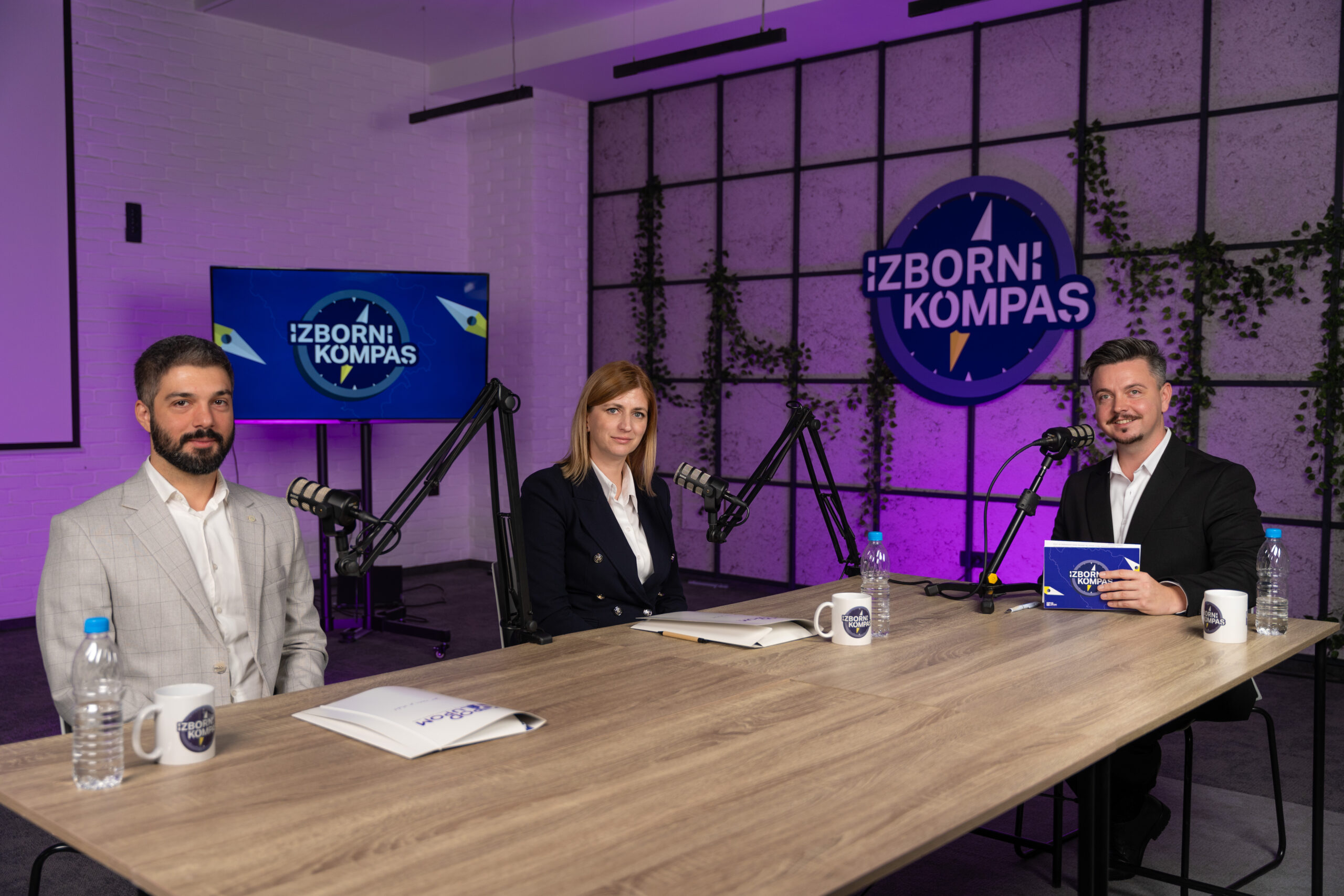
The new episode of the Election Compass podcast explores where the law and practice diverge, why sanctions fail to deter violations of electoral rules, and what needs to change.
What is the value of an Election Law if its violations go unpunished? This was the central question addressed in the latest episode of the podcast by Damjan Ožegović, Senior Researcher and Legal Affairs Associate at Transparency International in Bosnia and Herzegovina (TI BiH), and Alma Bajrić, Legal Expert at the Pod lupom Coalition.
Host Hasan Kamenjaković spoke with the guests about how institutions, primarily the Central Election Commission of Bosnia and Herzegovina (CEC BiH), handle reports of electoral irregularities, where the law and its implementation diverge, and whether existing penalties are sufficient to prevent further violations.
The guests’ assessment following the 2026 General Elections is clear: the rules are in place, but the same violations continue to recur from one election cycle to the next because penalties are often imposed too late, are too lenient, or are not imposed at all.
The figures presented by the guests illustrate the scale of the problem. During this election cycle, the Pod lupom Coalition recorded more than 1,200 irregularities and submitted 379 initiatives to the CEC BiH requesting that proceedings be initiated ex officio. To date, the CEC BiH has issued 65 sanctioning decisions, with total fines amounting to BAM 609,500, of which approximately BAM 433,000 were imposed on political subjects and around BAM 176,500 on candidates.
Transparency International in Bosnia and Herzegovina, which focused on the misuse of public resources, recorded approximately 3,000 events aimed at securing voter support and filed around 80 complaints. Candidates who used these occasions to promote themselves were present at 77% of events organised by public institutions.
A Greater Offence to Publish Than to Commit
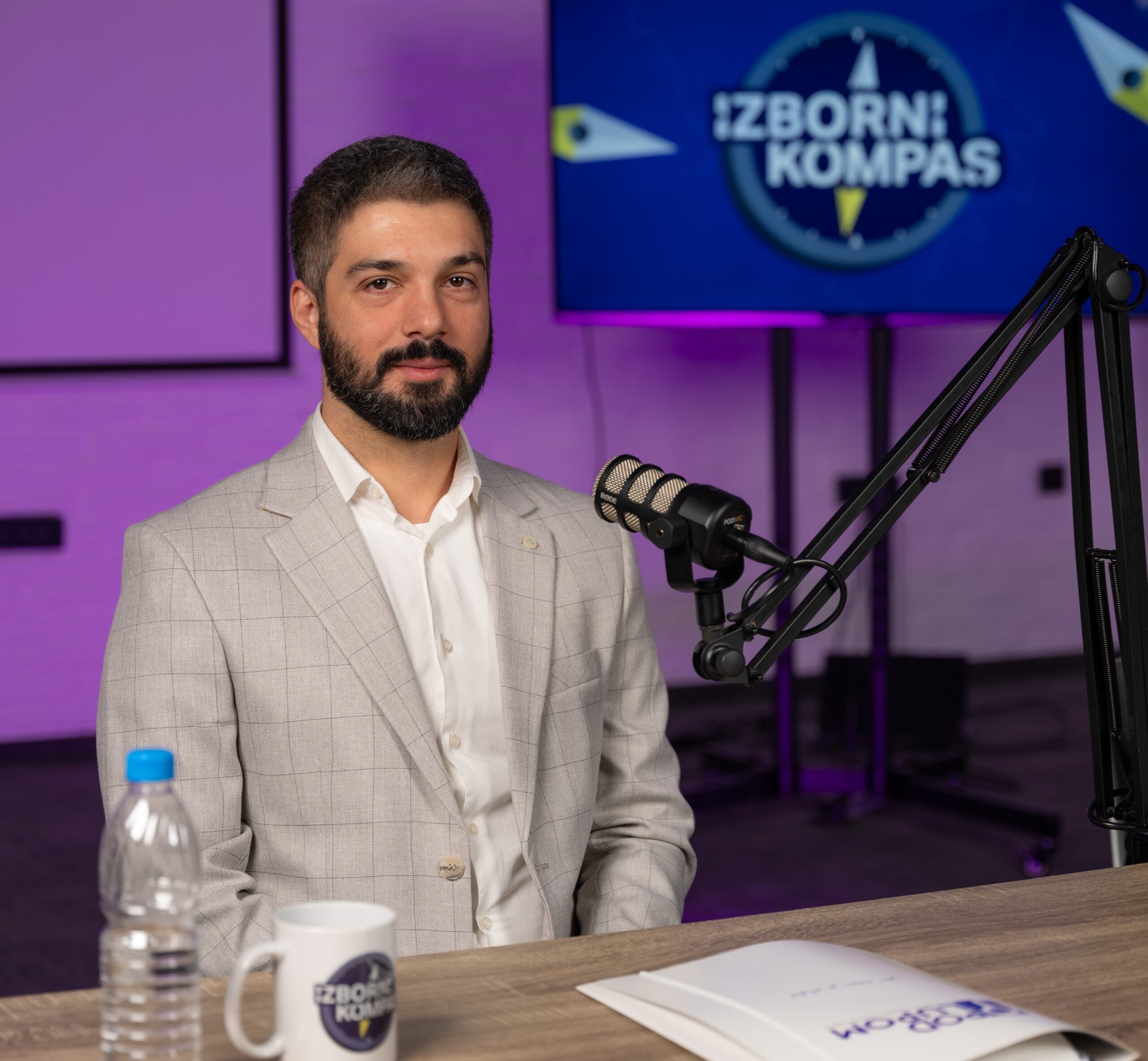 Ožegović assessed that the pre-election period had witnessed “a truly blatant abuse of public resources”. He particularly highlighted the increased number of one-off payments, including cash handouts, as well as numerous road paving and public lighting projects at which candidates who also held public office promoted themselves.
According to him, the problem lies in the interpretation of the law. The CEC BiH has primarily sanctioned cases of misuse of public resources in which someone used an event to promote themselves on social media, with the penalty also requiring the removal of the post. “We have reached a situation where publishing something constitutes a greater offence than actually doing it,” Ožegović warned.
He also pointed out that certain payments are justified as regular budgetary allocations, even though, according to him, they had been made for the first time and during a period in which such payments were prohibited.
Alma Bajrić identified a similar problem with premature election campaigning, which, under the law, begins on the day elections are called. According to her, the competent authorities failed to impose sanctions for activities carried out before the certification of political subjects, creating a “vacuum” lasting a month and a half, despite similar activities having been sanctioned during the previous election cycle.
She also highlighted inconsistencies in the enforcement of rules prohibiting the exploitation of children for political purposes. Visits to families and the distribution of gifts accompanied by photographs of minors are justified as the promotion of family values, while the appearance of children at a renovated playground was considered grounds for a sanction. “Children have neither the factual nor the legal capacity to understand that they are being exploited for political promotion,” Bajrić emphasised, adding that the best interests of the child must be protected to the greatest possible extent.
Penalties Must Be Timely and Meaningful
The guests agreed that irregularities continue to recur because violations of the rules remain worthwhile. The CEC BiH can impose fines of up to BAM 30,000, but, according to Bajrić, this maximum penalty has been imposed in only two or three cases. “For political subjects, it is therefore more worthwhile to pay the fines than to stop engaging in such practices,” she said.
Ožegović stressed that symbolic fines of a few thousand convertible marks cannot deter political subjects with substantial resources at their disposal. “As long as we continue to have this level of impunity, the situation will never improve.”
He also pointed to obstacles in media monitoring. Electronic media outlets are required to retain their broadcast recordings for only six weeks, while an election cycle lasts approximately 150 days, making it almost impossible to establish whether candidates have received balanced media coverage.

In addition to the amount of the penalty, the speed with which it is imposed is crucial. “An electoral irregularity committed during the period of premature campaigning, in May or June, for example, cannot be sanctioned after Election Day,” Bajrić emphasised, explaining that such a penalty loses its purpose once the electoral process has already ended.
She also reminded listeners that responsibility does not rest solely with the election administration. Police agencies, prosecutors’ offices and courts also have a mandate to protect the electoral process. To date, however, there have been no prison sentences or final convictions for criminal offences related to electoral law.
The host also highlighted some positive developments: new election technologies have been introduced, and Election Day has been considerably less affected by irregularities than in previous years. At the same time, he warned that this does not eliminate problems occurring before and after elections, including vote-buying and pressure on voters.
The conclusion of the discussion was that the conduct of political subjects will change only when sanctions are timely, progressively applied and enforced consistently. Transparency International in Bosnia and Herzegovina and the Pod lupom Coalition announced that they will present recommendations for improving the electoral process in the coming period.
You can watch the full episode of the Election Compass podcast on YouTube:
https://www.youtube.com/watch?v=bMeBerfc5LE
And listen to it on Spotify:
https://open.spotify.com/episode/7qlFW29r3440ZJXUGB19mv?si=JUy06RedTGmxfBwtLQ_5TA